Daftar Isi Show
| Characteristics | Detail |
|---|---|
| Genus | Xyris |
| Species | Xyris difformis |
| Family | Xyridaceae |
| Origin | Southern United States (bog/swamp habitat) |
| Common Name | Xyris sp. Red |
| Light Requirement | High (±100–150 µmol m⁻² s⁻¹ / PAR) |
| Optimal Temperature | 22–28 °C |
| Growth Rate | Slow |
| Placement | Midground |
| Plant Height | ±10–15 cm |
| Ideal pH | 5.5–6.8 |
| Water Hardness | GH 1–6 dGH; KH 0–5 dKH (optimal 0–3 dKH) |
| CO₂ Requirement | Medium–high |
| Propagation Method | Offsets (daughter plants) |
Additional Information
Xyris sp. Red (Xyris difformis) is a rosette-type aquascape plant from the Xyridaceae family, originating from swamp habitats with permanently water-saturated substrates. This natural environment shapes its preference for soft water with low buffering capacity.
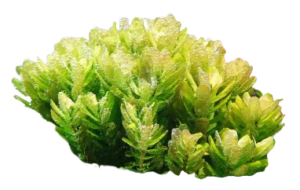
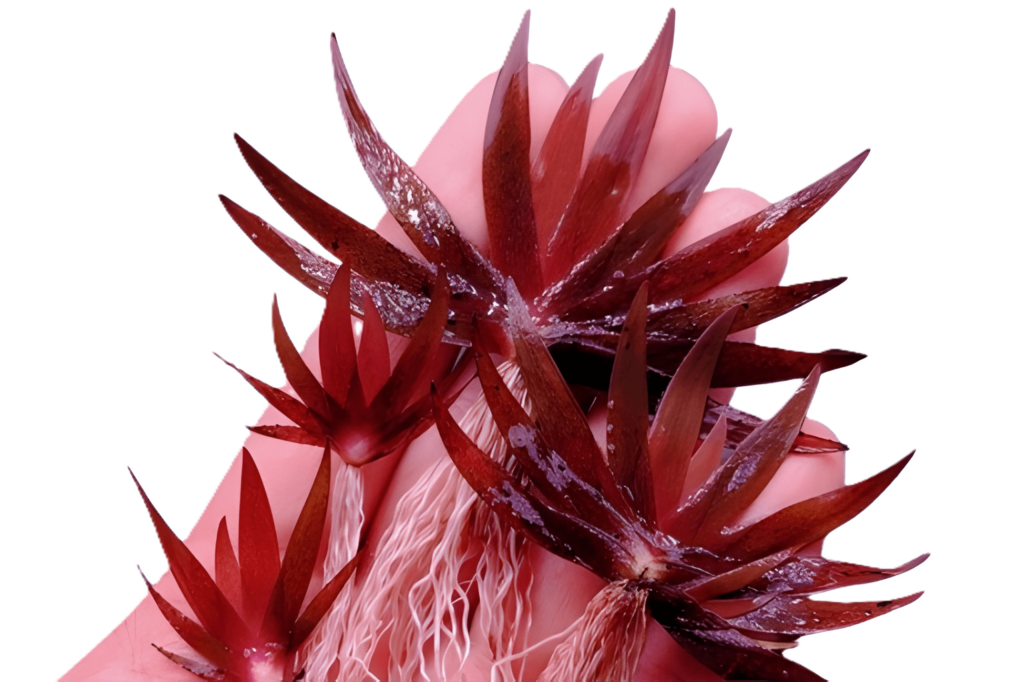
Morphologically, this plant has elongated, flat leaves with a vertical orientation growing from a central rosette. The leaf arrangement forms a fan-like structure with a relatively firm texture. Under certain conditions—particularly high lighting and balanced nutrients—the leaves may exhibit a color gradient from green to red.
In aquascape layouts, this plant is generally used as a midground element to provide structural contrast against stem plants and carpeting plants.
Requirements and Care
Growth Characteristics
This plant grows in a rosette pattern with a centralized growth point and no elongated stem. The growth rate is classified as slow, especially during the initial adaptation phase in the aquarium.
Its response to light is clearly defined. High intensity promotes more compact and upright leaf growth and increases red coloration potential. Under low light conditions, growth becomes slower and leaf color tends to remain green.
Over time, the plant develops a strong root system, especially in nutrient-rich substrates.
Light
The light requirement falls under the high category, with a range of approximately ±100–150 µmol m⁻² s⁻¹ PAR.
High light plays a role in increasing rosette density and stimulating red coloration. At lower intensity, the plant can still survive, but growth slows and visual characteristics become less optimal.
Proper placement is important to avoid shading, as the vertical leaf orientation requires consistent light distribution.
CO₂ and Carbon
The CO₂ requirement is classified as medium–high. This plant can survive without CO₂ injection, but with very slow growth and limited visual performance.
In systems with stable CO₂, the plant exhibits more consistent growth and stronger leaf structure. Stability of dissolved carbon is a key factor in maintaining plant health.
Nutrients
As a rosette plant, Xyris sp. Red (Xyris difformis) absorbs nutrients primarily through its roots. A nutrient-rich substrate supports root development and helps maintain growth stability.
A balance of macro and micronutrients is essential. In aquascaping practice, maintaining non-excessive nitrogen levels can enhance red coloration without inhibiting growth. Micronutrients also contribute to maintaining leaf quality.
Water Parameters
This plant grows optimally in soft water with a slightly acidic pH, around 5.5–6.8. The ideal temperature range is 22–28 °C.
Water hardness requires careful attention. Xyris sp. Red (Xyris difformis) is adaptable at KH 0–5 dKH but performs best at low KH levels in the range of 0–3 dKH. Within this range, carbon stability is easier to maintain and micronutrient uptake becomes more efficient.
GH is recommended within the range of 1–6 dGH. As with most swamp plants, stability of parameters is more important than absolute values, so sudden fluctuations should be avoided.
Substrate
The use of active substrates such as aquasoil is highly recommended, as they provide long-term nutrients while supporting root system development.
The roots of Xyris sp. Red (Xyris difformis) can grow significantly over time, making substrate an important factor in maintaining plant stability. In inert substrates, growth is still possible with consistent nutrient dosing via the water column.
Once the plant has adapted, replanting should be minimized to preserve root integrity.
Propagation
Propagation is carried out through offsets that grow around the base of the parent plant. Offsets with sufficient roots and leaves can be carefully separated.
Separation can be done using cutting tools or manually with a gentle technique. The best time to separate is when the offsets are sufficiently developed to improve adaptation success.
Conclusion
Xyris sp. Red (Xyris difformis) is a rosette aquascape plant characterized by vertical leaf structure and red coloration potential under optimal conditions. With high light requirements and slow growth, it is best suited for stable and controlled systems.
This plant is effective as a midground element for building visual structure in aquascape layouts. Although adaptable to various conditions, its best performance is achieved in systems with strong lighting, stable CO₂, and low water hardness—especially KH in the range of 0–3 dKH.
Overall, this plant offers a combination of aesthetic value and long-term stability in a well-planned aquascape.