
How to Set Up and Care for an Aquascape for Beginners!
Find peace by creating your own miniature underwater world. A comprehensive guide from scratch to becoming a skilled aquascaper.
Aquascaping Is More Than Just Decoration
This Is a Way of Life
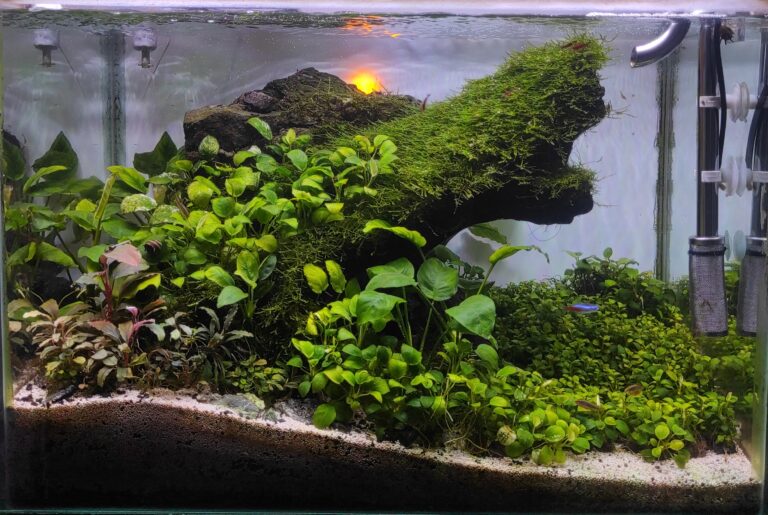
Imagine a miniature rainforest with small valleys, gentle hills, and a tranquil stream. Or a neat rock landscape, covered in a carpet of green plants. That’s an aquascape a small, living world right inside your home.
This isn’t just about keeping fish. Here, you become the guardian of an ecosystem: watching new leaves grow, following the movements of fish among the rocks, and feeling the calm that emerges slowly and naturally.
An aquascape is a form of meditation you can touch and see. A work of art that grows every day. Every rock, piece of driftwood, and plant you choose will become part of the small, ever-evolving life under your care.
- “If life feels empty and boring, maybe what you need isn’t a vacation, but nature that you can care for.”

Why Aquascape?
Therapy for the Mind
Reduce stress and anxiety by connecting with nature. Observing the tranquil underwater world has a naturally meditative effect.
Living Creations
The satisfaction of watching your design grow and evolve every day. Every week, your aquascape changes and evolves just like the natural world.
Learning About the Life Cycle
Teach yourself patience, consistency, and responsibility. Understanding a mini-ecosystem teaches you about the balance of nature.
A Close-Knit Community
Join a close-knit community of aquatic enthusiasts who support one another. Share experiences, plants, and inspiration with fellow aquascapers.
How to Create an Aquascape for Beginners
1. Choose an Aquascape Theme
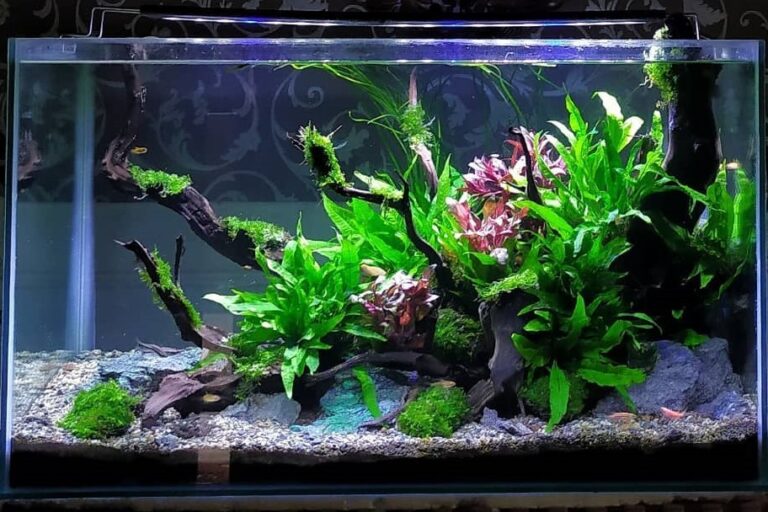
Different aquascape themes require different care, so decide on the style you want to create—such as Nature Style, Dutch Style, Brazilian Style, Jungle Style, or Iwagumi Style. Then, sketch out the aquascape you want to create and decide which plants you’ll use. Start with plants in the “easy” category first—don’t jump straight into difficult ones, as each plant has different needs and you’ll need to learn about them first.
2. Prepare the Aquarium and Equipment
Different aquascape themes require different care, so decide on the aquascape style you want to create, such as Nature Style, Dutch Style, Brazilian Style, Jungle Style, or Iwagumi Style. Then sketch out the aquascape you want to create, and decide which plants you’d like to use. Start with plants in the “easy” category first—don’t jump straight into difficult ones, as each plant has different needs and you’ll need to learn about them first.
3. Preparing the Hardscape & Layout
Prepare the necessary hardscape materials according to the aquascape theme you determined earlier, such as wood, rocks, G-glue, tissue paper, or wood shavings/coconut husk shavings to reinforce the hardscape joints, and the tools needed to shape the hardscape.
Easy-to-Follow Guide to Caring for an Aquascape

Daily Care
- Check the water temperature to ensure it does not exceed 30 °C; the ideal range is 24–26 °C.
- Make sure the CO2 and lights are turned on at the scheduled times.
- Feed the fish in moderation; do not overfeed.
- Do not let fish waste stick to the plant leaves.
- Enjoy your aquascape.
Weekly Maintenance
- Perform a 50% water change with fresh water every week (twice a week if there is a lot of fauna).
- Remove algae from the glass and algae attached to the hardscape, substrate, or plants.
- Trim plants that have grown too tall.
- Add macro and micro liquid fertilizers to ensure the plants’ nutritional needs are met.
- Clean the mechanical filter media if the water flow feels slow or has slowed down.
Monthly Maintenance
- Optional: Perform a complete water parameter test (pH, KH, GH, NO2, NO3)
- Thorough filter cleaning (biological filter media should only be rinsed with aquarium water), and mechanical media can be completely cleaned.
- Reorganize or heavily prune plants; for certain plants like bacopa, replant by pulling them out and cutting the lower stem, then reinserting the tip or upper stem at varying heights—shorter in the front and taller in the back.
- If nutrients in the substrate have
Articles & Inspiration



Support Us to Keep Growing
Every small contribution helps us continue improving and sharing better content for you.