Daftar Isi Show
| Characteristics | Detail |
|---|---|
| Genus | Hygrophila |
| Species | Hygrophila polysperma ‘Rosanervig’ |
| Family | Acanthaceae |
| Origin | Cultivar |
| Common Name | Hygrophila polysperma ‘Sunset’ |
| Light Requirement | Medium–high (±60–120 µmol m⁻² s⁻¹ / PAR) |
| Optimal Temperature | 22–28 °C |
| Growth Rate | Fast |
| Placement | Midground – Background |
| Plant Height | 20–40 cm |
| Ideal pH | 5.0–7.5 |
| Water Hardness | GH 3–12 dGH; KH 1–6 dKH |
| CO₂ Requirement | Adaptive |
| Propagation Method | Stem cuttings (head cuttings, side shoots) |
Additional Information
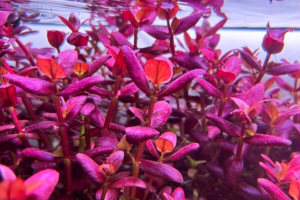
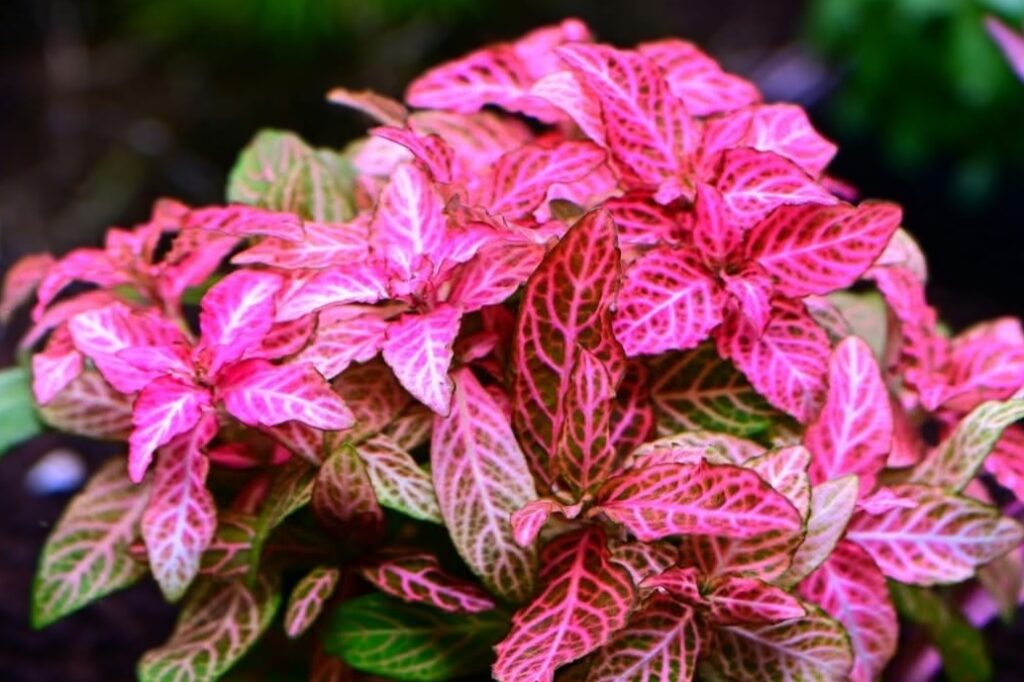
Hygrophila polysperma ‘Rosanervig’ is a cultivated variety of Hygrophila polysperma, widely recognized in aquascaping for its distinctive leaf pattern. The leaves feature prominent white to pink veins that contrast with the surrounding leaf tissue. In submerged conditions, leaf coloration can range from pale green to pinkish or reddish tones, depending on light intensity and nutrient availability.
This plant grows as a vertical stem plant with active branching. Its leaves are generally smaller compared to the standard species form, making it more versatile for use in aquariums of various sizes, including nano tanks.
In aquascape layouts, it is typically positioned in the midground to background. Its variable coloration provides effective visual contrast, especially in compositions dominated by green plants. In addition to its aesthetic role, its fast growth contributes to early-stage biological stabilization of the aquarium system.
Requirements and Care
Growth Characteristics
This plant exhibits vertical growth with a fast rate and strong branching capability. Under optimal conditions, stems produce numerous lateral shoots, forming dense plant clusters.
Its response to light is significant. Under lower light intensity, internodes tend to elongate and leaf coloration remains predominantly green. Under higher light, growth becomes more compact with shorter internodal spacing.
It is also important to note that this plant may produce reverted shoots with plain green leaves. These should be trimmed to maintain the variegated characteristics.
Light
The light requirement falls within the medium to high category, with an optimal range of approximately 60–120 µmol m⁻² s⁻¹.
Under medium lighting:
The plant grows stably
Leaf vein patterns remain visible
Coloration tends toward green with light accents
Under high lighting:
Leaf coloration develops into pink to reddish tones
Internodes become shorter
The overall appearance becomes more compact and decorative
Stronger lighting is essential when aiming to achieve the characteristic “sunset” coloration.
CO₂ and Carbon
Hygrophila polysperma ‘Rosanervig’ is adaptive to CO₂ availability.
In systems without CO₂ injection:
It can still grow well
Growth rate is slightly reduced
Color intensity is generally lower
In systems with CO₂ (approximately ±15–25 mg/L):
Growth becomes faster and more stable
Coloration appears brighter and more consistent
Plant structure becomes more compact
Nutrients
As a fast-growing stem plant, its nutrient requirements are relatively high, especially under strong lighting conditions.
Macronutrients such as nitrogen, phosphate, and potassium must be available in balanced amounts to support new tissue development. Micronutrients, particularly iron (Fe), play a crucial role in enhancing leaf coloration.
Nutrient imbalance may lead to fading colors, unstable growth, or pale and translucent leaves.
Water Parameters
This plant is highly tolerant of a wide range of water parameters.
It can adapt to a broad pH range of 5.0–7.5 without significant issues. Water hardness is also flexible, with GH ranging from 3–12 dGH and KH from 1–6 dKH.
Despite its tolerance, maintaining stable parameters remains important, particularly for preserving leaf coloration and overall plant form.
Substrate
This plant does not have strict substrate requirements, as it can absorb nutrients both from the water column and through its roots.
However, the use of nutrient-rich substrate provides additional benefits, including faster growth, stronger root systems, and improved stability during planting.
In inert systems, nutrient availability in the water column becomes the primary factor influencing growth.
Propagation
Propagation is carried out vegetatively through stem cuttings.
Common methods include:
Cutting the top portion (head cutting)
Replanting the cut stem into the substrate
Utilizing naturally occurring side shoots
This process is simple and efficient, consistent with the plant’s fast and vigorous growth characteristics.
Conclusion
Hygrophila polysperma ‘Rosanervig’ is an easy-to-maintain aquascape stem plant with high adaptability to various environmental conditions.
It is suitable for both low-tech and high-tech systems, with optimal coloration achieved under higher lighting and balanced nutrient supply. In addition to its aesthetic value through unique leaf patterns and coloration, it also functions as a biological stabilizer in aquariums due to its rapid growth.
As a midground to background plant, it is highly suitable for both beginners and experienced aquascapers seeking a combination of ease of care and strong visual impact.