Daftar Isi Show
| Characteristic | Detail |
|---|---|
| Genus | Crinum |
| Species | Crinum calamistratum |
| Family | Amaryllidaceae |
| Origin | Cameroon, West Africa |
| Common Name | African Onion Plant, Crinum Calamistratum |
| Light Requirement | Low to medium (±30–80 µmol m⁻² s⁻¹ / PAR) |
| Optimal Temperature | 22–28 °C |
| Growth Rate | Slow |
| Placement | Midground / Background |
| Plant Height | ±30–80 cm |
| Ideal pH | ±6.0–7.5 |
| Water Hardness | GH 2–12 dGH; KH 1–6 dKH |
| CO₂ Requirement | Adaptable |
| Propagation | Bulb offsets and vegetative propagation |
Additional Information
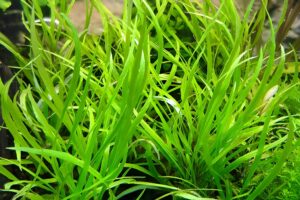
Crinum calamistratum is a bulbous aquatic plant characterized by long, narrow, and strongly undulating leaves that emerge vertically from a basal bulb. Its distinctive curled foliage creates a highly recognizable linear texture that differs substantially from conventional stem plants and rosette-forming species commonly used in aquascaping.
The plant is primarily valued for its architectural structure rather than rapid biomass production. Its elongated, ribbon-like leaves can develop substantial length while maintaining a relatively narrow profile, allowing the plant to introduce vertical movement without creating the dense visual mass associated with broad-leaved species.
Within aquascapes, Crinum calamistratum is commonly used as a structural element in the midground or background. Its rigid yet flowing leaves create strong textural contrast when combined with broad-leaved plants, carpeting species, or compact foreground vegetation. In natural-style layouts, moderate water movement can further emphasize the characteristic undulating motion of the foliage.
The species is native to freshwater environments in West Africa, particularly Cameroon, where it occurs in habitats with sedimentary substrates and relatively calm to moderately flowing water. Its adaptation to variable freshwater conditions contributes to its comparatively broad tolerance in aquarium environments, although stable conditions remain important for sustained growth.
Care and Requirements
Growth Characteristics
Crinum calamistratum develops from a relatively large bulb and maintains a predominantly vertical growth habit. New leaves emerge directly from the bulb, gradually elongating upward and potentially reaching the water surface in deeper aquariums.
Growth is naturally slow, and established specimens generally require very little pruning. Individual leaves can remain functional for extended periods, allowing mature plants to maintain their characteristic form without frequent intervention.
The bulb functions as an internal storage organ for nutrients and carbohydrates, providing a degree of physiological resilience during short-term fluctuations in nutrient availability. However, prolonged environmental stress may result in growth stagnation, deterioration of older leaves, or reduced production of new foliage.
Because of its slow growth rate, sudden changes in environmental conditions can be more noticeable over time than in rapidly growing stem plants. Maintaining stable water chemistry, adequate nutrition, and an appropriate substrate therefore remains more important than attempting to maximize growth speed.
Lighting
The lighting requirement of Crinum calamistratum falls within the low to medium range, approximately 30–80 µmol m⁻² s⁻¹ PAR.
Under lower light intensity, the leaves tend to become longer and narrower, producing a more open and elongated appearance. Moderate lighting generally promotes denser foliage and allows the characteristic undulating structure of the leaves to become more visually pronounced.
Excessive light is usually unnecessary and may increase the risk of algae colonization on the leaf surfaces. Because the foliage develops relatively slowly, algae can establish more easily when light intensity is disproportionately high relative to plant growth and nutrient availability.
For this reason, moderate and stable lighting is generally preferable to very high intensity, particularly in low-tech or lightly planted aquariums.
CO₂ and Carbon
Crinum calamistratum is relatively adaptable in terms of carbon availability and can grow successfully without injected CO₂. This makes it suitable for low-tech aquariums with low to moderate plant density.
In CO₂-injected systems, a stable supply of dissolved CO₂ can improve overall growth consistency and support healthier-looking foliage. However, increased carbon availability does not transform the species into a fast-growing plant, as its naturally slow growth habit remains a defining characteristic.
CO₂ fluctuations are generally less likely to cause acute damage than they are in highly demanding aquatic plants. Nevertheless, maintaining consistent carbon availability contributes to better long-term physiological stability.
Nutrients
Crinum calamistratum obtains a significant proportion of its nutrients through its root system and bulb. A nutrient-rich or adequately supplemented substrate therefore provides an important foundation for long-term growth.
Dissolved nutrients in the water column can complement root-based nutrition, particularly for maintaining healthy foliage. However, excessive fertilization is not necessary and may create an imbalance between nutrient availability, plant uptake, and algae growth.
Nitrogen, phosphorus, potassium, and essential micronutrients should be maintained at consistent levels. Nutritional deficiencies may become apparent through yellowing older leaves, reduced leaf production, or prolonged growth stagnation.
For this species, consistency is generally more beneficial than aggressive nutrient dosing.
Water Parameters
Crinum calamistratum is relatively tolerant of freshwater conditions and can adapt to a moderately broad range of water chemistry.
A pH of approximately 6.0–7.5 and a temperature of 22–28 °C provide suitable conditions for long-term cultivation. General hardness between GH 2–12 dGH and carbonate hardness between KH 1–6 dKH are generally tolerated.
Although the species is considered adaptable, sudden changes in water chemistry should be avoided. Rapid shifts in temperature, hardness, or pH can cause physiological stress and may temporarily interrupt new leaf development.
Stable environmental conditions are particularly important for established specimens because their slow growth rate means recovery from stress can take considerable time.
Substrate
A stable substrate with sufficient depth is recommended to accommodate the relatively large bulb and developing root system.
Both active aquasoil and inert substrates can be used, provided adequate nutritional support is available. When using an inert substrate, root tabs or another localized nutrient source can help compensate for the lack of inherent substrate fertility.
The bulb should not be buried completely. A portion of the bulb should remain exposed above the substrate surface to reduce the risk of rot and ensure proper development.
Good substrate structure is also important for maintaining root-zone aeration and minimizing the accumulation of organic debris around the bulb. Excessively compacted substrate can restrict root development and create unfavorable conditions around the basal portion of the plant.
Propagation
Propagation of Crinum calamistratum is primarily achieved through vegetative production of offsets around the parent bulb.
Once a daughter bulb has developed sufficient roots and established its own foliage, it can be carefully separated from the parent plant and replanted. Separation should be performed gently to minimize damage to the roots and basal tissues.
Sexual propagation through flowers and seeds is possible biologically but is uncommon in closed aquarium systems. Vegetative propagation is considerably more practical for aquascaping because it allows established plants to produce genetically identical offsets under suitable conditions.
Conclusion
Crinum calamistratum is a distinctive bulbous aquascape plant valued for its long, narrow, and strongly undulating foliage. Its architectural growth pattern provides substantial vertical texture and movement without requiring intense lighting or demanding CO₂ supplementation.
The species is relatively tolerant of variations in water chemistry and is well suited to low-tech and medium-tech aquariums. Its slow growth rate, low to moderate lighting requirement, and ability to utilize nutrients through its bulb and root system make it a practical choice for long-term aquascaping.
As a midground to background specimen, Crinum calamistratum functions primarily as a structural and textural element. Its distinctive foliage can introduce strong linear contrast, particularly when positioned alongside broad-leaved or low-growing plants, making it an effective choice for natural-style layouts and larger aquariums.