Daftar Isi Show
| Characteristic | Detail |
| Genus | Bacopa |
| Species | Bacopa caroliniana |
| Family | Plantaginaceae |
| Origin | North America and Central America |
| Common Name | Bacopa Colorata, Pink Bacopa |
| Light Requirement | Medium – High (±70–130 µmol m⁻² s⁻¹ / PAR) |
| Optimal Temperature | 20–28 °C |
| Growth Rate | Moderate |
| Placement | Midground – Background |
| Plant Height | ±20–40 cm |
| Ideal pH | 5.5–7.5 |
| Water Hardness | GH 3–12 dGH; KH 1–6 dKH |
| CO₂ Requirement | Adaptive – Medium |
| Propagation | Stem cutting |
Additional Information
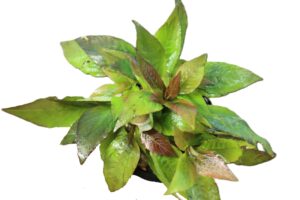
Bacopa caroliniana ‘Colorata’ is a horticultural variant of Bacopa caroliniana well known in aquascaping for its leaf coloration that shifts to pink or magenta when grown submerged under adequate lighting. Originating from regions across North America to Central America, the species naturally inhabits shallow waters, marshes, and slow-moving riverbanks.
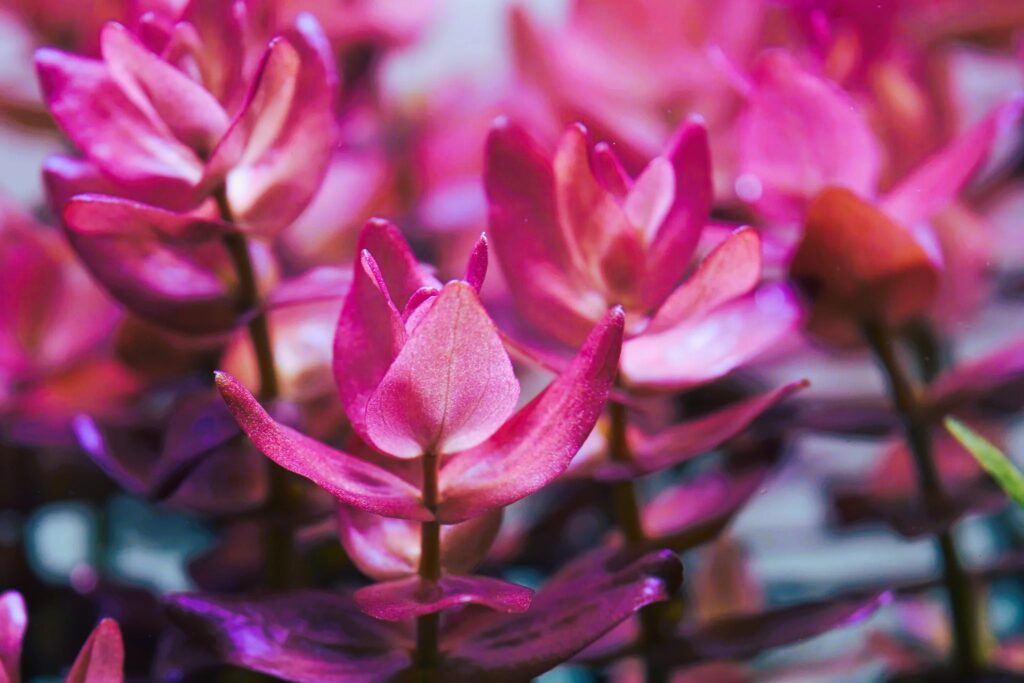
Morphologically, it features thick, upright stems with opposite leaf arrangements at each node. The leaves are oval to rounded with relatively blunt tips and a somewhat thick, fleshy texture. This slightly succulent tissue structure makes the plant sturdy and resilient against damage during pruning or replanting.
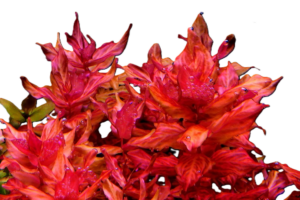
Unlike the standard green form of Bacopa caroliniana, the ‘Colorata’ variant possesses a stronger capacity for anthocyanin pigment production. Under optimal conditions, leaf colors transition into bright pink or vivid magenta, though achieving maximum coloration is not always straightforward in home aquariums. Adequate PAR levels, a balanced light spectrum, and consistent nutrient and carbon delivery serve as critical factors in inducing vibrant, lasting pink hues. In practice, peak color expression frequently manifests primarily on the upper shoots receiving direct light, whereas lower foliage often retains a subtle gradient of reddish-green to pale pink.
In aquascape layouts, Bacopa caroliniana ‘Colorata’ is commonly utilized as a colored stem accent in the midground to background areas. Its stiff stem habit delivers a clean vertical accent and a soft color contrast compared to more intensely red stem species. When planted in small groups, it builds a stable, visually dense cluster, particularly when maintained at a lower canopy height.
Care and Requirements
Growth Characteristics
Bacopa caroliniana ‘Colorata’ grows in a strictly vertical stem pattern. Leading shoots continuously extend toward the water surface while producing new foliage at each node. Under adequate lighting, internodal spacing remains short and compact, whereas lower light levels cause stems to stretch and appear sparse. Its growth rate is moderate, making it less aggressive than many other stem plants, though routine maintenance is still required to keep its height proportional within the aquascape layout.
Lighting
The optimal lighting category for Bacopa caroliniana ‘Colorata’ ranges from medium to high, around 70–130 µmol m⁻² s⁻¹ PAR at leaf level. Under medium lighting, the plant grows reliably, though the foliage remains predominantly green with faint pink highlights. Clear pink coloration emerges as PAR levels increase and the plant receives sufficient light energy to stimulate anthocyanin production. Achieving maximum pink saturation requires a balanced combination of adequate PAR, proper light spectrum, and stable nutrient levels; if any of these variables are lacking, the plant will grow normally but fail to develop its signature pink color.
CO₂ and Carbon
This cultivar displays an adaptive nature regarding carbon availability. Bacopa caroliniana ‘Colorata’ can survive in aquariums without CO₂ injection, though growth will be slower and the pink coloration will be less intense. It maintains healthy leaf development as long as nutrients remain balanced. In systems with stable CO₂ injection, growth is significantly more consistent and structural density improves. Adequate dissolved carbon also helps the plant handle higher PAR levels without experiencing growth stress.
Nutrition
As a stem species, Bacopa caroliniana ‘Colorata’ absorbs nutrients both from the water column and through root development in the substrate. Balanced macronutrients—nitrogen, phosphorus, and potassium—are necessary to support steady leaf and stem production. Micronutrients play an equally vital role in maintaining tissue health and supporting metabolic pathways under intense light. A steady, balanced dosing regime proves far more effective than intermittent, high-concentration fertilization.
Water Parameters
This plant tolerates a broad range of water parameters provided environmental conditions remain stable. Recommended guidelines include an ideal pH range of 5.5–7.5 and an optimal temperature between 20–28 °C. Excessively high temperatures can destabilize growth rates and cause elongated stem structures. Low to moderate water hardness provides a stable growing environment, with general hardness levels of 3–12 dGH and carbonate hardness levels of 1–6 dKH. Parameter stability is far more critical than targeting rigid numeric values.
Substrate
Bacopa caroliniana ‘Colorata’ has flexible substrate requirements, as its root system primarily serves to anchor the stem. Nutrient-rich active soil helps provide a stable root environment, though the plant can also grow in inert substrates such as sand or fine gravel as long as water column fertilization is maintained. Its root system develops moderately and does not form an overly aggressive network.
Propagation
Propagation is performed using standard stem cuttings. Top sections that reach a target height can be trimmed and replanted directly into the substrate. In aquascaping practice, replanting is often favored over simple top-pruning. When allowed to grow tall and pruned only at the top, side shoots emerging from lower nodes tend to branch laterally, resulting in an untidy cluster over time. Consequently, many aquascapers prefer to uproot the stems, trim and replant the healthy top cuttings, and discard the older, elongated lower stems to preserve a clean, upright, and organized appearance.
Conclusion
Bacopa caroliniana ‘Colorata’ is a distinctive aquatic stem plant prized for its soft pink to magenta foliage. Achieving its full color potential requires a combination of adequate PAR, proper light spectrum, and stable nutrient and carbon availability. The plant is adaptive enough to survive in both low-tech and high-tech setups, though its best visual performance occurs in systems with sufficient lighting and stable parameters. Placed in midground or background zones, it offers an attractive color accent and tidy vertical structure, with periodic replanting serving as an effective method for maintaining ideal proportions and a clean cluster appearance.