Daftar Isi Show
| Characteristics | Detail |
|---|---|
| Genus | Hygrophila |
| Species | costata |
| Family | Acanthaceae |
| Origin | South America |
| Common Name | Hygrophila costata |
| Light Requirement | Medium–high (±70–150 µmol m⁻² s⁻¹ / PAR) |
| Optimal Temperature | 22–28°C |
| Growth Rate | Fast |
| Placement | Background |
| Plant Height | 25–60 cm |
| Ideal pH | 5.0–8.0 |
| Water Hardness | ±3–15 dGH; ±1–8 dKH |
| CO₂ Requirement | Medium–high |
| Propagation | Top cuttings and side shoots |
Additional Information
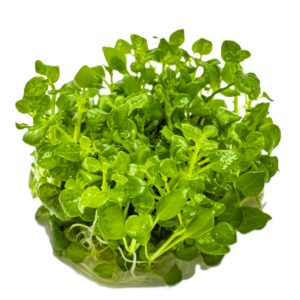
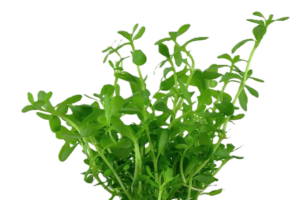
Hygrophila costata is a stem plant species from South America with elongated leaf morphology that becomes densely arranged during the submersed phase. The leaves are generally bright green with a glossy appearance, creating strong contrast against darker green background plants. Plants sold in the market are typically in emersed form, with rounder leaves and wider internodal spacing. After adapting underwater, the internodes shorten and the leaves become narrower.
In aquascaping, Hygrophila costata functions as a background element with a “clean, bright green stem cluster” visual character, providing strong density and helping form solid color blocks. Its fast growth and high nutrient consumption make it an effective ecosystem stabilizer, especially in high-tech systems.
Requirements and Care
Growth Characteristics
As a vigorous stem plant, Hygrophila costata grows vertically with internode formation that responds to light intensity. Regular trimming is required to maintain a compact structure. Cutting the top will stimulate lateral shoot growth, resulting in a denser colony. This plant tolerates variations in water parameters, but optimal performance is achieved in systems with stable CO₂ and balanced nutrient supply.
Lighting
Ideal lighting category: medium–high
Precision range: ±70–150 µmol m⁻² s⁻¹ / PAR
Under low light intensity, the plant tends to produce longer internodes and a looser structure. Leaves may widen but lose canopy density. Under medium–high PAR, leaves become narrower, the canopy more compact, and the green coloration reaches maximum intensity.
CO₂ and Carbon
The CO₂ requirement is classified as medium–high.
The plant can still survive in low CO₂ systems, but growth will be slower and the structure less stable (with wider internodal spacing). In high-tech systems with CO₂ levels of 20–30 mg/L, the plant exhibits optimal density, fast pruning response, and brighter leaf coloration.
Nutrients
As a fast-growing stem plant, Hygrophila costata requires a consistent supply of macro and micronutrients. Stable availability of nitrogen, potassium, and micronutrients prevents chlorosis in young leaves. Its rapid growth helps absorb excess nutrients, reducing algae potential, especially during the early setup phase.
Water Parameters
This plant is adaptable to a wide range of water parameters, but stability remains the key factor.
Ideal range:
pH 5.0–8.0
GH ±3–15 dGH
KH ±1–8 dKH
Best performance occurs in soft to moderately hard water, especially in layouts with fast-growing plants.
Substrate
The root system of Hygrophila costata develops well in both active and inert substrates. Roots spread extensively to absorb nutrients, so substrates with base mineral content or root tab support can improve growth consistency. The plant does not form stolons, but the roots will thicken as the stem height increases.
Propagation
Propagation is done through top cuttings or side shoots. The upper part of the stem can be replanted directly, while the remaining stem will produce lateral shoots. This technique keeps the plant group dense and proportional as a background element.
Conclusion
Hygrophila costata is a fast-growing, stable background stem plant that responds well to light and CO₂. This aquascape plant is ideal for high-tech systems but can still adapt to low-tech setups with consistent maintenance. Its bright green coloration and elongated leaf shape create a clean visual effect and strong contrast within layouts. With regular trimming, it can form dense clusters while helping stabilize the aquarium ecosystem through high nutrient consumption.