Daftar Isi Show
| Characteristic | Detail |
| Genus | Ludwigia |
| Species | Ludwigia sp. ‘Red Mini’ (not formally described) |
| Family | Onagraceae |
| Origin | South America |
| Common Name | Ludwigia Red Mini, Ludwigia Super Red Mini |
| Light Requirement | Medium – High (±80–150 µmol m⁻² s⁻¹ / PAR) |
| Optimal Temperature | 22–28 °C |
| Growth Rate | Moderate |
| Placement | Midground – Background |
| Plant Height | ±10–25 cm |
| Ideal pH | 5.5–7.0 |
| Water Hardness | GH 2–8 dGH; KH 0–4 dKH |
| CO₂ Requirement | Medium – High |
| Propagation | Stem cutting |
Additional Information
Ludwigia sp. ‘Red Mini’ is a compact stem plant variant developed from South American Ludwigia species. It lacks a formal species classification, meaning it remains categorized scientifically as Ludwigia sp.
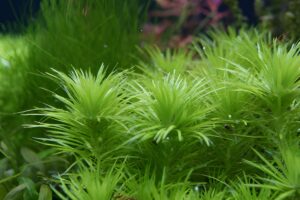
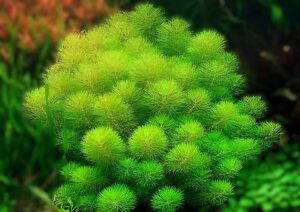
Morphologically, it features upright stems that produce lateral branches following a trim. Leaves are arranged in opposite pairs, possessing an oval to elliptical shape with relatively small dimensions. Leaf coloration ranges from reddish-green to intense ruby red, depending heavily on light intensity, carbon availability, and nutrient levels.
In aquascaping layouts, its visual appeal stems from the combination of small leaf size and vibrant red coloration. Compared to other red stem plants, Ludwigia sp. ‘Red Mini’ maintains shorter internodes, resulting in a dense and proportional structure. This characteristic makes it effective as a color accent in both midground and background areas without overpowering the surrounding composition.
Its natural origin corresponds to shallow waters with high light exposure and a continuous nutrient supply, explaining its preference for systems with stable environmental parameters.
Care and Requirements
Growth Characteristics
This species exhibits vertical growth with strong lateral branching in response to trimming. Under optimal conditions, growth remains compact with short internodal spacing.
Under low light or limited carbon availability, the plant demonstrates signs of stem elongation (etiolation), developing longer internodes and reduced leaf density. It responds exceptionally well to trimming, making it easy to train into dense, bushy clusters.
Lighting
- Category: Medium – High
Within the ±80–100 µmol m⁻² s⁻¹ PAR range, the plant grows reliably while beginning to display reddish hues. To achieve intense red colors and a denser structure, optimal PAR levels range between ±120–150 µmol m⁻² s⁻¹.
Under lower light intensities, leaves tend to turn green or dull red, resulting in a looser plant structure. High light stimulates anthocyanin pigment production, shortens internodes, and increases overall visual density.
CO₂ and Carbon
While this plant can survive in systems without CO₂ injection, growth rate remains slow and optimal red coloration is difficult to achieve.
With a consistent CO₂ supply of ±20–30 ppm, the plant demonstrates more compact growth, healthier leaves, and more reliable coloration. In aquascaping practice, peak performance is attained within high-tech setups.
Nutrition
Nutrient demands are moderate to high. Nitrogen supports vegetative growth; however, controlled nitrogen limitation under specific conditions can enhance red color intensity.
Phosphate and potassium promote steady growth, while micronutrients such as iron (Fe) contribute to vivid color expression. Maintaining a proper nutrient balance is crucial, as severe excess or deficiency can disrupt stability and induce algae growth.
Water Parameters
This species adapts well to acidic through neutral pH levels. Low to moderate water hardness supports more efficient nutrient uptake.
Low KH levels help maintain stable dissolved CO₂ concentrations, which is vital for red stem plants. Parameter stability is far more critical than exact target values, as sudden fluctuations can trigger leaf drop or growth stagnation.
Substrate
An active aquasoil substrate provides a strong advantage during the initial setup by delivering readily available nutrients directly to the root system. Roots develop well and can absorb nutrients from both the substrate and the water column.
In inert substrates, the plant can still thrive provided a consistent water column nutrient supply is maintained.
Propagation
Propagation is executed via stem cuttings by taking healthy top or mid-stem sections and replanting them into the substrate.
Routine pruning serves not only as a propagation method, but also as a way to maintain a compact bush shape and stimulate lateral shoot formation.
Conclusion
Ludwigia sp. ‘Red Mini’ is a compact stem plant known for its vibrant red color, serving as a key visual element in midground and background layouts. It reaches its full potential under intense lighting and stable CO₂ injection, making it best suited for medium to high-tech aquariums.
Functionally, it is easy to shape through trimming and offers consistent growth responses. Its primary aesthetic value lies in its small leaf proportion, intense red hues, and dense growth habit, all of which support high-precision aquascape compositions.