Daftar Isi Show
| Characteristic | Detail |
| Genus | Rotala |
| Species | Rotala tulunadensis |
| Family | Lythraceae |
| Origin | Southeast Asia (tropical freshwaters) |
| Common Name | Rotala Tulunadensis |
| Light Requirement | Medium (±60–100 µmol m⁻² s⁻¹ / PAR) |
| Optimal Temperature | 22–28 °C |
| Growth Rate | Moderate |
| Placement | Midground – Background |
| Plant Height | 20–40 cm (can grow taller in deep aquariums) |
| Ideal pH | 5.5–7.0 |
| Water Hardness | GH 4–6 dGH; KH 0–1 dKH (tolerance up to ±3 dKH) |
| CO₂ Requirement | Medium |
| Propagation | Stem cutting |
Additional Information
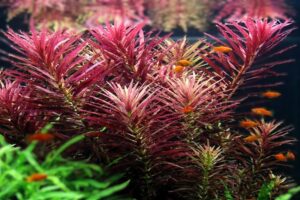
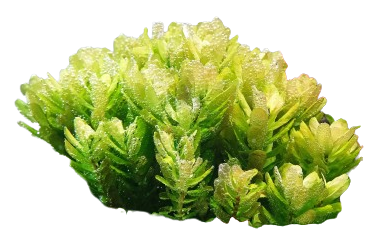
Rotala tulunadensis is an aquatic stem plant in the family Lythraceae, recognized for its bright green, oval to narrow leaves. Under higher lighting intensities, foliage arranges densely along the stems and can express subtle reddish undertones at the shoot tips. Its slender, flexible stem architecture allows it to form tight clusters with a delicate, soft visual texture.
In aquascape compositions, Rotala tulunadensis serves as a versatile midground to background plant, creating vertical plant masses that offer soft color contrast against broad-leafed species or intensely red flora. Its small, tightly packed leaf structure introduces a light, natural aesthetic well suited for both Nature Style and Dutch Style layouts.
Its natural habitats consist of slow to moderately flowing tropical freshwater bodies over muddy or sandy substrates. These natural environments typically feature soft, slightly acidic water with minimal parameter fluctuations.
Care and Requirements
Growth Characteristics
Rotala tulunadensis exhibits an upright vertical growth pattern with excellent lateral branching potential following a trim. It naturally tends to build a compact, bushy habit without requiring overly aggressive pruning. Growth speed is moderate, displaying a strong response to long-term environmental stability.
Lighting
Lighting needs fall into the medium category. Under lower to moderate light levels, the plant maintains a vibrant bright green coloration with relatively long internodal spacing. Approaching the upper limits of medium lighting, internodes shorten and leaves pack more tightly together, occasionally developing reddish highlights at the shoot tips. Excessively high light is unnecessary and may trigger physiological stress unless strictly balanced with carbon and nutrient availability.
CO₂ and Carbon
Carbon requirements are classified as medium. While Rotala tulunadensis can survive without CO₂ injection, optimal performance is achieved with a stable supply of dissolved carbon. Fluctuations in carbon delivery are far more detrimental to growth than maintaining a low but consistent CO₂ concentration. In high-tech systems with regulated CO₂ injection, stem structures grow noticeably denser and exhibit uniform growth rates.
Nutrition
This species is sensitive to water column nutrient fluctuations. It can thrive in both low-lean and rich fertilization regimes, provided residual nutrient levels remain strictly consistent over time. Sharp imbalances between dosing input and plant uptake can cause sudden nutrient spikes or drops, often triggering growth stagnation or physiological stress. A nutrient-rich substrate helps stabilize root-zone feeding when column dosing is kept low.
Water Parameters
Rotala tulunadensis delivers its best performance in soft water conditions with low alkalinity. A slightly acidic to neutral pH is preferred, with overall parameter stability being far more critical than targeting specific baseline numbers. Sharp fluctuations in pH, GH, or KH can disrupt the plant’s physiological balance and degrade growth quality.
Substrate
A nutrient-rich substrate, such as active aquasoil, supports healthy root development and consistent nutrient delivery. Substrate cleanliness is a crucial factor, as accumulations of detritus and decomposing organic matter can disturb the delicate root systems of sensitive species. A clean, stable substrate bed supports long-term health far better than an over-fertilized substrate that is poorly maintained.
Propagation
Propagation is easily carried out using standard stem cuttings. Terminal shoot tops are trimmed and replanted into the substrate, while the remaining lower stems generate lateral shoots. Selective pruning of the tallest stems is recommended over mass clear-cutting to maintain steady growth continuity and avoid transition delays.
Conclusion
Rotala tulunadensis is a refined aquatic stem plant valued for its fine visual texture and natural bushy growth habit. While it is not excessively demanding regarding light intensity or CO₂ levels, it is highly sensitive to environmental parameter shifts, particularly regarding nutrient levels and water alkalinity. Consequently, it is best suited for well-maintained aquascapes under stable parameter management across both medium-tech and high-tech setups. Aesthetically, it provides a lightweight vertical structure and soft color contrast that functions effectively across midground and background zones.