Daftar Isi Show
| Characteristic | Detail |
| Genus | Bacopa |
| Species | Bacopa lanigera |
| Family | Plantaginaceae |
| Origin | South America |
| Common Name | Woolly Bacopa |
| Light Requirement | Medium (±50–100 µmol m⁻² s⁻¹ / PAR) |
| Optimal Temperature | 22–28 °C |
| Growth Rate | Moderate |
| Placement | Midground – Background |
| Plant Height | ±20–40 cm |
| Ideal pH | 6.0–7.2 |
| Water Hardness | GH 3–10 dGH; KH 1–5 dKH |
| CO₂ Requirement | Medium |
| Propagation | Stem cutting |
Additional Information
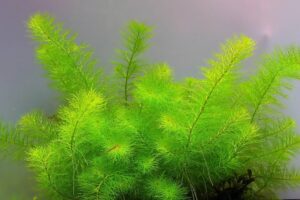
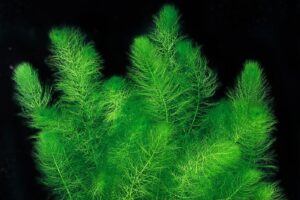
Bacopa lanigera is a species within the genus Bacopa known for distinct morphological characteristics compared to related species such as Bacopa monnieri or Bacopa caroliniana. It features relatively thick stems with a surface that often appears slightly hairy or pubescent—giving rise to its species name lanigera, which etymologically refers to a “woolly” character.
The leaves of Bacopa lanigera are oval to elliptical with a somewhat thick texture. The leaf surface usually displays a matte finish ranging in color from green to bluish-green, depending on lighting conditions. Leaves grow in opposite pairs along the stem, forming a neatly arranged vertical structure when the plant is healthy.
In its natural habitat, this species is found in shallow waters to seasonal swamps across South America. It often grows in areas that experience fluctuating water levels, granting it the ability to adapt to both fully submerged and semi-aquatic conditions.
In aquascaping layouts, Bacopa lanigera is typically positioned in the midground to background areas. Its sturdy stem structure and relatively large leaves make it well-suited for creating a solid mass of vegetation in the middle to back sections of the layout. The coarser leaf texture also helps create striking visual contrast when paired with fine-leafed stem plants like Rotala or Didiplis. When planted in small to medium groups, it forms a stable vertical cluster that is not overly dense, making it easy to integrate into various aquascaping styles without making the layout look crowded.
Care and Requirements
Growth Characteristics
Bacopa lanigera is a vertical-growing stem plant where the main stem extends toward the water surface while side shoots develop from nodes along the stem. Its growth rate is moderate, demonstrating steady development under favorable conditions. It responds well to pruning, where cutting the top section usually stimulates new branching from the lower portion of the stem. Proper planting distance is important in aquascaping to ensure each stem receives adequate light, as planting too densely can cause lower leaves to deteriorate due to shading and light competition.
Lighting
Light requirements for Bacopa lanigera fall under the medium category, around 50–100 µmol m⁻² s⁻¹ PAR. At light levels below this range, stems tend to stretch with longer internodes and foliage may become sparse, causing the cluster to look loose. Under stable medium lighting, the plant exhibits more compact growth with shorter internodes and active branching that results in a fuller cluster. While high-intensity light is not required to maintain health, consistent lighting remains essential for a balanced growth structure.
CO₂ and Carbon
Carbon requirements for this species are generally at a medium level. Bacopa lanigera can survive in non-CO₂ injected setups, though growth will be slower and the stems will tend to stretch. In aquariums with a stable supply of injected CO₂, the growth response improves noticeably with consistent leaf development and frequent side shoots following a trim. A reliable carbon supply also supports steady plant metabolism, especially under medium light levels.
Nutrition
As a stem plant with relatively thick leaves, Bacopa lanigera absorbs nutrients primarily from the water column. Adequate macronutrients such as nitrogen, phosphorus, and potassium are necessary to support stem development and new leaf production, while micronutrients are equally important for maintaining metabolic functions and vibrant leaf color. Nutrient imbalances typically manifest as slowed growth or inconsistent leaf sizing, making consistent nutrient availability far more beneficial than temporary high-dose fertilization.
Water Parameters
This species thrives in relatively stable water conditions common to planted aquariums. Recommended parameters include a pH range of 6.0–7.2, a temperature between 22–28 °C, a general hardness of 3–10 dGH, and a carbonate hardness of 1–5 dKH. It adapts well across soft to moderately hard water ranges, and maintaining parameter stability is much more critical than chasing a specific exact value.
Substrate
The root system of Bacopa lanigera develops from lower stem nodes embedded in the substrate, meaning a stable substrate helps anchor the plant and keep stems upright. Granular or porous active aquasoil supports healthy root development, providing important physical support even though most nutrients are absorbed directly through the water column. Planting stems a few centimeters apart ensures each individual stem has sufficient room to establish.
Propagation
Propagation is easily carried out via stem cuttings, which is the standard method for aquatic stem plants. Once stems have grown sufficiently tall, the top portion can be cut and replanted directly into the substrate where new roots will sprout from the buried nodes within a few days. The remaining bottom section in the substrate will usually produce new lateral shoots, helping density build up naturally over time.
Conclusion
Bacopa lanigera is a hardy stem plant characterized by sturdy stems and thick, oval-shaped leaves. It is ideal for midground to background placement, where it creates a stable mass of vegetation and offers strong textural contrast against finer-leafed species. It requires medium light and responds exceptionally well when supported by stable CO₂ injection and balanced nutrients. With a manageable moderate growth rate and straightforward propagation via stem cuttings, Bacopa lanigera is an accessible, reliable option for aquascapers seeking clean structure and lasting aesthetic value.