Daftar Isi Show
| Characteristic | Detail |
| Genus | Bacopa |
| Species | Bacopa monnieri |
| Family | Plantaginaceae |
| Origin | South Asia, Southeast Asia, Africa, and parts of Australia |
| Common Name | Water hyssop, Brahmi |
| Light Requirement | Low – Medium (±25–80 µmol m⁻² s⁻¹ / PAR) |
| Optimal Temperature | 20–30 °C |
| Growth Rate | Moderate |
| Placement | Foreground – Midground |
| Plant Height | ±10–30 cm |
| Ideal pH | 6.0–7.5 |
| Water Hardness | GH 3–12 dGH; KH 1–6 dKH |
| CO₂ Requirement | Adaptive |
| Propagation | Stem cutting |
Additional Information
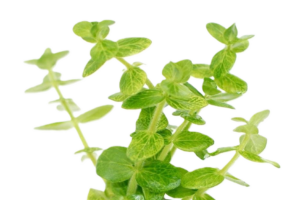
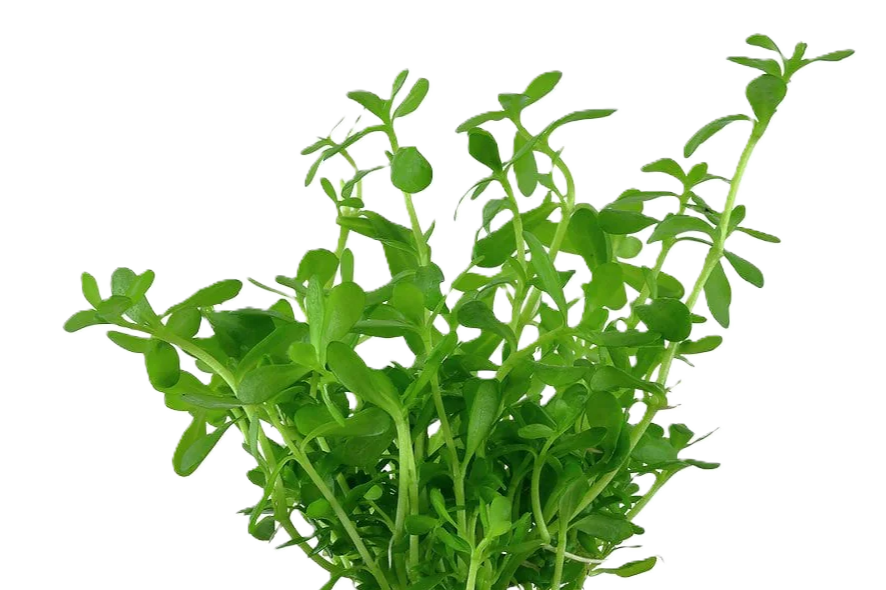
Bacopa monnieri is a semi-aquatic plant well known in both botany and aquascaping. It features thick, succulent-like stems with oval to spatulate leaves that grow in opposite pairs along the stem. The leaves are bright green to yellowish-green with a relatively thick texture, an adaptation that allows it to survive in fluctuating aquatic environments as well as seasonally flooded marshlands.
In its natural habitat, Bacopa monnieri is widely found along riverbanks, swamps, rice paddies, and tropical to subtropical wetlands. This environment explains its ability to adapt to a broad range of water conditions, including varying hardness and nutrient levels.
In aquascaping, this species is frequently used as a tall foreground or midground plant in natural layouts and tropical biotope aquariums. Its relatively thick stem provides a distinct visual texture compared to other stem plants that are typically more slender. When planted in small to medium groups, Bacopa monnieri creates a stable green accent that contrasts well against fine-leafed plants such as Rotala or Myriophyllum. Its dense leaf structure also gives the plant a strong sense of architectural form within the layout. Under higher lighting, the internodal distance tends to shorten, resulting in a more compact cluster, whereas under low light, the stem stretches with wider leaf spacing.
Care and Requirements
Growth Characteristics
Bacopa monnieri is a stem plant with a vertical growth pattern where the main stem grows toward the water surface and side shoots emerge from leaf nodes along the stem. Its growth rate is stable and less aggressive than many other stem plants. Under adequate lighting and nutrient conditions, the stem continuously elongates toward the surface and can produce additional branches once trimmed. The plant is quite tolerant of varying environmental conditions, continuing to grow in low-tech non-CO₂ setups albeit at a slower pace, while high-tech systems with higher lighting and carbon injection encourage tighter, more compact foliage.
Lighting
Light requirements for Bacopa monnieri generally fall into the low to medium category, ranging around 25–80 µmol m⁻² s⁻¹ PAR at the plant level. Under low light intensity, the plant continues to grow reliably, though stems tend to stretch with wider internodes as an adaptation to limited photosynthetic energy. Under medium light, the overall structure becomes denser with shorter internodes, thicker leaves, and a fuller cluster appearance, though high light intensity is not required to maintain health.
CO₂ and Carbon
The carbon requirements for Bacopa monnieri are adaptive, allowing it to thrive in setups without injected CO₂ by utilizing naturally dissolved carbon in the water. In low-tech systems, growth remains steady as long as light and nutrients are balanced. However, in high-tech systems with stable CO₂ injection, the growth response is noticeably faster with more active branching. This adaptive nature offers great flexibility across various aquarium types, ranging from simple setups to high-tech aquascapes.
Nutrition
As a stem plant with a moderate growth rate, Bacopa monnieri requires a balanced supply of macronutrients and micronutrients in the water column. Nitrogen, phosphorus, and potassium support stem growth and new leaf production, while micronutrients such as iron and manganese help maintain healthy leaf color. Nutrient imbalances typically manifest as slowed growth or reduced leaf size, making nutrient stability far more important than high temporary doses.
Water Parameters
This species is relatively tolerant of diverse water conditions provided parameters remain stable. Recommended guidelines include an ideal pH range of 6.0–7.5 and an optimal temperature of 20–30 °C, fitting typical tropical aquarium conditions. For water hardness, Bacopa monnieri grows well within GH 3–12 dGH and KH 1–6 dKH, reflecting its broad adaptation to natural aquatic habitats.
Substrate
Although primary nutrient uptake can occur through the water column, a stable substrate aids root development. A porous aquascaping substrate allows roots to anchor securely and improves overall stem stability. The root system of Bacopa monnieri is not exceptionally deep, but it still plays an active role in absorbing additional nutrients from the substrate. In aquascaping practice, stems are usually planted a few centimeters apart to ensure each stem receives sufficient light access.
Propagation
Propagation of Bacopa monnieri in aquascaping is typically carried out through stem cuttings. Stems that have grown sufficiently long can be cut, and the top portions can be replanted directly into the substrate where new roots will develop from buried nodes within a few days to weeks. This method offers a reliable way for aquascapers to multiply stems and maintain the shape of plant clusters within the layout.
Conclusion
Bacopa monnieri is a highly adaptive and stable aquascaping plant featuring thick stems and oval green leaves that deliver a distinct visual texture in aquarium layouts. It is well-suited for placement in the tall foreground to midground areas, particularly for building dense vegetation structures. Its lighting needs range from low to medium, and its carbon requirements are adaptive, allowing it to perform well in both low-tech and high-tech systems. Given stable water parameters and balanced nutrition, this plant maintains consistent growth and is easily managed through routine pruning and replanting.