Daftar Isi Show
| Characteristics | Details |
|---|---|
| Genus | Ludwigia |
| Species | Ludwigia ovalis |
| Family | Onagraceae |
| Origin | South America |
| Common Name | Ludwigia ovalis |
| Light Requirement | Medium–high (±70–140 µmol m⁻² s⁻¹ / PAR) |
| Optimal Temperature | 22–28°C |
| Growth Rate | Moderate |
| Placement | Midground – background |
| Plant Height | 20–50 cm |
| Ideal pH | 5.5–7.2 |
| Water Hardness | GH 2–10 dGH; KH 0–5 dKH |
| CO₂ Requirement | Medium–high |
| Propagation | Stem cuttings |
Additional Information
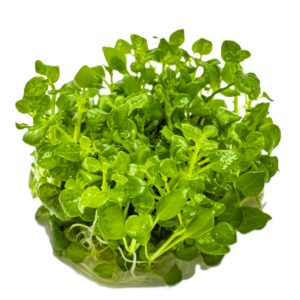
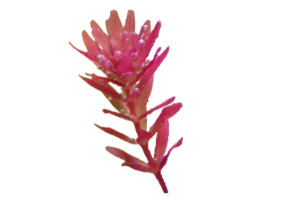
Ludwigia ovalis is a stem plant characterized by oval to rounded leaves arranged in opposite pairs along relatively slender stems. Leaf coloration ranges from yellowish green to orange-red depending on light intensity and nutrient availability, particularly nitrogen and micronutrients.
Under optimal conditions, the plant exhibits a noticeable color contrast between the upper portions (brighter or more reddish) and the lower parts, which tend to appear paler. Internodes remain relatively short under high lighting, resulting in a more compact and dense appearance.
Its natural habitat includes shallow waters, swamps, and riverbanks with slow flow. These conditions explain its preference for soft to moderately hard water and stable environments.
In aquascaping, Ludwigia ovalis is commonly used as a midground to background plant. Its role is primarily as a color accent and visual transition between zones, especially in nature-style or Dutch-style layouts that emphasize plant layering.
Requirements and Care
Growth Characteristics
This plant grows vertically as a typical stem plant, with lateral branching occurring after trimming. It responds well to pruning, allowing the formation of denser clusters.
Under low light conditions, growth tends to elongate with longer internodes and greener coloration. In contrast, under higher light and stable CO₂ conditions, growth becomes more compact with more intense coloration.
Light
Ludwigia ovalis falls within the medium to high light category, with an effective range of approximately 70–140 µmol m⁻² s⁻¹.
At medium light intensity, the plant grows stably but coloration tends toward green or pale yellow. To achieve optimal red-orange coloration, lighting closer to the high range with even distribution is required.
Insufficient light will lead to stem elongation and reduced visual quality. Conversely, high light without balanced nutrients and CO₂ may trigger algae on leaf surfaces.
CO₂ and Carbon
This plant responds well to CO₂ injection and is practically classified as medium–high requirement.
Without CO₂, Ludwigia ovalis can still survive in low-tech systems; however, growth becomes slower, coloration less intense, and structure less compact.
In high-tech systems with stable CO₂ levels (±20–30 ppm), the plant demonstrates optimal performance in terms of color, density, and growth rate.
Nutrients
As a stem plant, nutrient requirements are relatively balanced between macronutrients (nitrogen, phosphate, potassium) and micronutrients (particularly iron).
Nitrogen deficiency may accelerate the shift toward red coloration, but excessive nitrogen can reduce color intensity. Micronutrient deficiencies, especially iron, are often visible through pale new leaves.
Stability and balance of nutrients are far more important than high dosing.
Water Parameters
Optimal parameter range:
pH: 5.5–7.2
Temperature: 22–28°C
GH: 2–10 dGH
KH: 0–5 dKH
This plant prefers soft to moderately hard water. Parameter stability is a key factor, particularly in high-light systems where minor fluctuations can affect plant metabolism and trigger algae.
Substrate
As a stem plant, Ludwigia ovalis is not entirely dependent on substrate, but it benefits from nutrient-rich conditions.
Active substrate or nutrient-rich soil supports better root development and helps stabilize nutrient availability. In inert substrates, nutrient supply must be ensured through the water column.
Roots function primarily as anchoring structures and supplementary nutrient uptake pathways rather than the sole nutrient source.
Propagation
Propagation is carried out through stem cuttings.
Stems are cut at healthy internodes and replanted into the substrate. The remaining lower portion produces new shoots from existing nodes, while the top cut continues growing as a new individual.
Regular trimming is also used to increase density and maintain aquascape structure.
Conclusion
Ludwigia ovalis is a stem plant with flexible visual characteristics, capable of displaying green to orange-red coloration depending on environmental conditions. With a moderate growth rate and good trimming response, it is effective as a midground to background element.
In low-tech systems, the plant can still grow with moderate performance. However, to achieve optimal color and form, a high-tech system with medium–high lighting and stable CO₂ supply is strongly recommended.
From an aesthetic perspective, Ludwigia ovalis provides meaningful contrast in both color and structure, making it a relevant choice for a wide range of modern aquascape compositions.